The International Relations Division
It is mainly responsible for co-ordinating all International Affairs of the Ministry of Public Service, Labour and Social Welfare on employment and labour issues including labour migration as well coordinating all programmes under all related Development Partners Regional Organisations working in Zimbabwe. These include International Labour Organisation (ILO) African Union (AU) Southern African Development Community, International Organisation of Migration (IOM) and African Regional Labour Administration Centre ARLAC.
Functions
- Co-ordination of all ILO, AU-Labour and Social Affairs, and SADC-ELS activities of Government.
- Provision of technical and advisory services to the Minister, Deputy and Secretary during the Conferences.
- Participation in Inter-Ministerial Committee meetings and Joint Commissions.
- Writing reports due to SADC, AU and the United Nations (UN) including the ILO in accordance with article 19 and 22 of the ILO Constitution.
- Initiating processes of ratification of ILO Conventions
- Co-ordination of ILO and IOM projects being implemented in the Ministry.
- Co-ordination of Memoranda of Understanding (MoUs) and Bilateral Agreements on employment and Labour
- Facilitating the participation of Zimbabwe in ARLAC training programme
- Co-ordination of legislative reforms under the Labour Administrative Departmen
Registration and Processing Division
The Registration and Processing Division is responsible for the registration, inspection, and governance of labour market institutions.
Functions
- Appointments of Designated Agents and Arbitrators
The division processes applications for the registration of employment codes of conduct and the appointments of Designated Agents and Arbitrators.
- Labour market inspections
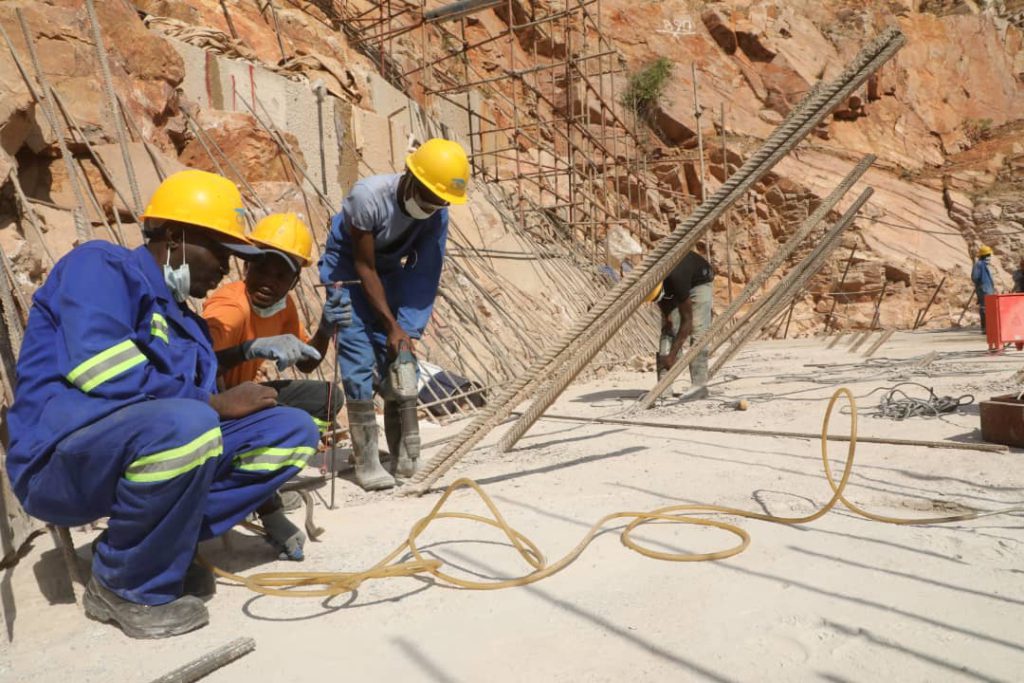
The division also performs labour market inspections. These inspections are crucial for ensuring workplaces comply with labour laws, occupational safety standards, and employment regulations. By conducting thorough and regular inspections, the division protects workers’ rights, promotes safe work environments, and ensures employers meet their legal obligations. The division monitors the performance of Designated Agents in terms of section 63(3c) of the Labour Act [Chapter 28.01]
- Registering Collective Bargaining Agreements and codes of Conducts
The division is tasked with registering Collective Bargaining Agreements (CBAs) in terms of section of the 79 Labour Act [Chapter 28:01] and Employment Code of Conduct in terms of section 101 of the Labour Act [Chapter 28.01], ensuring that agreements between employers and employees through their representative bodies are officially documented and enforced. This process helps to solidify the mutual understanding and compliance with labour standards that govern various sectors.
- Regulates Labour market Institutions
The division regulates labour market institutions (Trade Unions, Employers Organizations, and Federations of Trade unions and Federation of Employers’ organizations /Associations) in terms of section 34A and 120 of the Act
The division facilitates the appointment process for the Advisory Council committee, whose members are appointed by the Minister in terms of Section 19 of the Labour Act [Chapter 28.01].
Industrial Relations Division
The Division’s primary mandate is to coordinate and facilitate all matters of interest between Government as the Employer and Public Service Workers’ representatives. These include engagements for the improvement of conditions of service for members through the National Joint Negotiating Council (NJNC, training or capacity building of members as well as registration of unions or staff associations.
Functions
- National Joint Negotiating Council (NJNC)
This Division is responsible for facilitating negotiations and collective bargaining meetings, as well as providing secretariat services to the National Joint Negotiating Council (NJNC). A core function involves facilitating and lobbying for a unified Government position from the Public Service Commission (PSC) and the Ministry of Finance, Economic Development, and Investment Promotion. Additionally, the Division facilitates the appointment of Chairpersons and Government Negotiators to the Council. It also undertakes the crucial task of appraising the Minister and Cabinet on the status of industrial relations and ongoing negotiations within the public service, and effectively addresses grievances or job action or threats of a strike by public servants.
- Registration of Associations
The Divisions facilitates the registration of Public Service Staff Associations/Unions in terms of the Public Service Act and S.I.45 of 1998. The registration of an Association is in four (4) main stages as indicated below:
Research and Economics Division
This Division’s role is to supports labour administration and employment promotion by gathering and disseminating labour market information through analysis, surveys, and forecasting.
Functions
- Labour Market Information
The Division is responsible for the provision of Labour Market Information to enable evidence-based decision-making. This is achieved by developing, maintaining, and updating the labour market information system, as well as by identifying emerging labour market issues and writing research papers to inform policymakers.
The Ministry is in the process of establishing a national productivity organisation (NPO) known as the Zimbabwe National Productivity Institute (ZNPI) with the mandate to promote productivity within workplaces and organisations. In this regard the Division has the responsibility to work in liaison with the ZNPI in driving the Productivity Movement in Zimbabwe by undertaking the following; facilitating productivity sensitisation workshops, coordinating surveys and researches on productivity matters for national development, undertaking company diagnosis to be able to check areas of productivity improvement, undertaking productivity training and consultancy services to establishments in the public and private sector
The Ministry is mandated by the Labour Act [Chapter 28:01] to ensure that no children engage in child labour activities in any sector of the economy. Therefore, the division undertakes Awareness and Advocacy workshops for the elimination of Child Labour
- Ensuring Compliance with Foreign Recruitment Policy Guidelines
This Division undertakes considerations on applications for work permits referred by the Department. It is also responsible for advising the Foreign Recruitment Committee on areas of skills resource shortage. Furthermore, the Division leads foreign recruitment monitoring visits to companies that apply for work permits, ensuring the verification of operations and the effectiveness of skills transfer.
Labour Relations Division
The Division is responsible for workplace inspections, dispute resolution and training of labour law.
Functions
Labour Officers are empowered in terms of Section 126 of the Labour Act Chapter 28:01 to carry out inspections at workplaces. The inspections are guided by the relevant inspection form provided. The objectives of carrying out inspections are to monitor and maintain compliance of labour laws.
Labour Officers on their own initiative or upon being called to do so, conduct training on labour law standards. They also raise awareness campaigns on labour laws and also liaise with National Employment Councils on labour relations issues. They also train labour institutions on establishment and conduct with other stakeholders. They also hold exhibition shows on different platforms such as Agriculture show and International Trade Fair.
Dispute resolution is where a Labour Officer redresses an employer-employee dispute that has come to his or her attention or has been declared and referred by an employee or employer for dispute resolution. Resolving may be done through mediation, Conciliation or Arbitration.
The division responsible for overseeing retrenchment matters, including dispute resolution and policy recommendations through the Retrenchment Board established under Section 3 of the Labour Act Chapter [28.01].
- Verify Farm Compensation Applicants
Verify Compliance on Labour issues for Farm Compensation applicants;